Sleep apnea is the most-searched respiratory condition in the world — and for good reason. An estimated 1 billion people between the ages of 30 and 69 globally live with obstructive sleep apnea, and a large majority remain undiagnosed. In Switzerland, as in the rest of Europe, rising rates of obesity, sedentary lifestyles, and an ageing population are pushing those numbers steadily upward.
If you wake up exhausted no matter how long you sleep, snore loudly, or have been told you stop breathing in the night, this guide is for you. At RespiraSwiss, we see patients every week who have been living with unmanaged sleep apnea for years — and who transform their health once it is properly treated. Read on to understand exactly what sleep apnea is, how to recognise it, how it is diagnosed, and what modern treatment looks like in 2025–2026.
What Is Sleep Apnea?
Sleep apnea is a condition in which breathing repeatedly stops and starts during sleep. These interruptions — called apneas — can last anywhere from a few seconds to over a minute, and may happen hundreds of times per night. Each pause wakes the brain just enough to restart breathing, preventing the deep, restorative sleep stages your body needs.
There are three distinct forms:
1. Obstructive Sleep Apnea (OSA) — the most common
OSA occurs when the muscles at the back of the throat relax during sleep, causing surrounding soft tissue to collapse inward and partially or completely block the airway. Despite continued effort to breathe, air cannot flow freely. This is a mechanical problem of the upper airway, not a neurological one.
2. Central Sleep Apnea (CSA)
Far less common, CSA happens when the brain fails to send the correct signals to the muscles that control breathing. The airway itself is not blocked — the body simply does not attempt to breathe for a period. CSA is often associated with heart failure, stroke, or the use of certain opioid medications.
3. Complex (Mixed) Sleep Apnea
This type combines both obstructive and central components. It can sometimes emerge after CPAP therapy begins to treat OSA, as the body reveals an underlying central component.
Sleep Apnea Symptoms: More Than Just Snoring
Most people associate sleep apnea with loud snoring — but snoring alone is not a reliable indicator. Many people who snore do not have sleep apnea, and some with sleep apnea do not snore at all. The symptom picture is broader and affects both night-time and daytime functioning.
Night-time symptoms
- Loud, chronic snoring — often reported by a partner as disruptive and irregular
- Witnessed apneas — a bed partner observes you stop breathing, followed by gasping or choking
- Frequent awakenings — waking for no clear reason, or with a sense of breathlessness
- Nocturia — waking repeatedly to urinate (a commonly overlooked but well-documented sign)
- Restless, fragmented sleep — tossing, turning, never reaching deep sleep stages
- Night sweats and dry mouth — caused by the effort of obstructed breathing
Daytime symptoms
- Excessive daytime sleepiness — the most common complaint; falling asleep during meetings, while reading, or even driving
- Morning headaches — caused by elevated CO₂ levels during sleep episodes
- Difficulty concentrating or memory problems — cognitive function, especially executive function and decision-making, is significantly impaired
- Mood changes — depression, irritability, and anxiety are all strongly linked to untreated OSA
- Reduced sex drive — hormonal disruption caused by chronic sleep deprivation
- Waking unrefreshed — regardless of hours slept, patients report never feeling rested

A word of caution: Many patients attribute these symptoms to stress, ageing, or lifestyle — and never seek evaluation. If several of the above apply to you, a proper sleep assessment is warranted.
Who Is at Risk? Risk Factors Explained
Sleep apnea can affect anyone — including children — but several factors significantly raise the likelihood of developing OSA:
Anatomical factors
- Narrow upper airway
- Large tonsils or adenoids
- Recessed jaw or small chin
- Thick neck (>40 cm in women, >43 cm in men is associated with increased risk)
Physiological and lifestyle factors
- Obesity — excess adipose tissue around the neck compresses the airway. It is the single strongest modifiable risk factor
- Age — risk increases significantly in adults over 50
- Male sex — men are approximately twice as likely to develop OSA before age 50; the gap narrows post-menopause in women
- Alcohol and sedatives — both relax throat muscles, worsening airway collapse during sleep
- Smoking — causes upper airway inflammation and fluid retention
- Nasal congestion — chronic nasal blockage forces mouth-breathing, which predisposes to airway collapse
- Family history — likely reflects shared anatomy and shared lifestyle factors
Comorbid conditions
Certain health conditions increase OSA risk or are frequently found alongside it:
- Asthma — people with asthma have approximately 2–2.5 times greater risk of developing OSA compared to the general population, due to shared airway inflammation and increased upper airway collapsibility. We discuss this relationship in detail on our asthma page.
- COPD — the co-existence of COPD and OSA is called “overlap syndrome” and carries a significantly higher risk of cardiovascular complications and mortality. Read more on our COPD page.
- Hypothyroidism — affects airway muscle tone
- Heart failure — frequently associated with central sleep apnea
- Acid reflux (GERD) — a known trigger for nocturnal airway irritation
- Type 2 diabetes — bidirectional relationship with OSA
Why Untreated Sleep Apnea Is Dangerous
Sleep apnea is not simply a nuisance. Left untreated, it carries serious and well-documented health consequences:
Cardiovascular disease is the most serious concern. Each apnea episode causes a surge in blood pressure as the body fights to resume breathing. Over months and years, this repeated stress damages the cardiovascular system. Untreated OSA is independently associated with:
- Hypertension (high blood pressure) — present in up to 50% of OSA patients
- Atrial fibrillation and other cardiac arrhythmias
- Coronary artery disease
- Stroke — risk is 2–4 times higher in untreated severe OSA
- Heart failure
Metabolic consequences include worsened insulin resistance, weight gain (a vicious cycle), and an increased risk of type 2 diabetes.
Cognitive and mental health effects are substantial. Chronic oxygen deprivation and sleep fragmentation impair memory consolidation, concentration, and emotional regulation. Depression and anxiety are significantly more prevalent in OSA patients.
Accident risk — excessive daytime sleepiness makes untreated sleep apnea a road safety issue. Swiss law requires drivers with confirmed, untreated severe OSA to suspend driving until adequately treated.
How Sleep Apnea Is Diagnosed
Diagnosis requires more than a symptom review. The gold standard is an overnight sleep study that directly measures breathing events.
Polysomnography (PSG)
Performed in a hospital or sleep laboratory, polysomnography is the most comprehensive study. It simultaneously records brain activity (EEG), eye movements (EOG), heart rhythm (ECG), muscle activity (EMG), oxygen saturation (SpO₂), and airflow, breathing effort, and snoring.
Results are expressed as the Apnea-Hypopnea Index (AHI) — the number of apnea or hypopnea events per hour of sleep:
| AHI Score | Severity |
|---|---|
| 0–4 events/hour | Normal |
| 5–14 events/hour | Mild OSA |
| 15–29 events/hour | Moderate OSA |
| ≥30 events/hour | Severe OSA |
Home Sleep Apnea Testing (HSAT)
For straightforward cases of suspected moderate-to-severe OSA in otherwise healthy adults, home sleep testing is an effective and convenient alternative. Modern home devices use pulse oximetry, respiratory effort sensors, and photoplethysmography to capture key data in the familiar environment of the patient’s own bedroom. Accuracy for detecting moderate-to-severe OSA has improved substantially in recent years, and AI-assisted analysis now enhances interpretation reliability.
At RespiraSwiss, our pulmonologists can advise on which testing approach is most appropriate for your individual clinical picture, and arrange referral where necessary.
Sleep Apnea Treatment: All Current Options Explained
This is the area that has seen the most rapid development in recent years. Patients today have far more choices than they did a decade ago.
1. Continuous Positive Airway Pressure (CPAP) Therapy — the gold standard
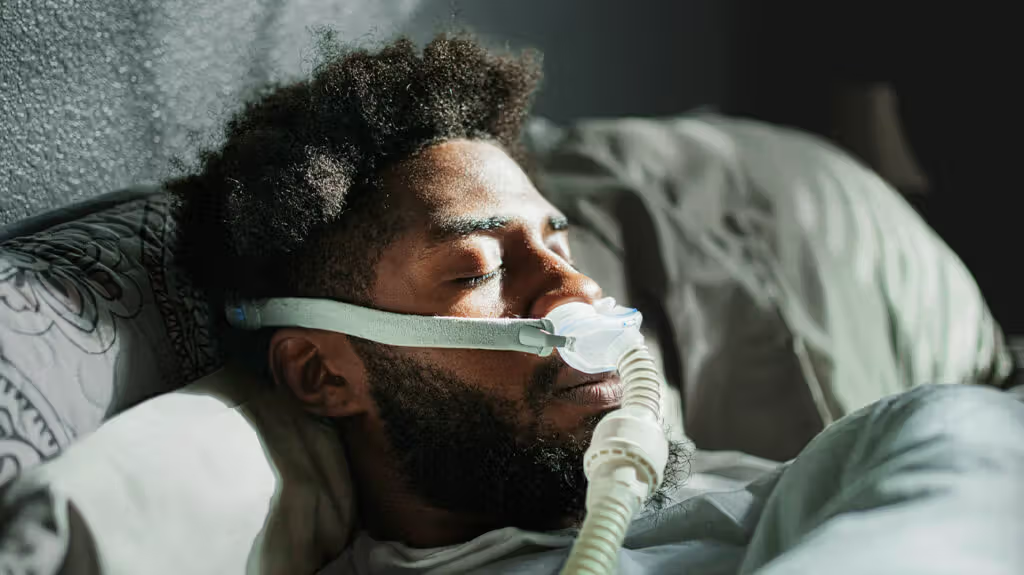
CPAP remains the most effective treatment for moderate to severe OSA. A small machine delivers a continuous stream of pressurised air through a mask worn over the nose (or nose and mouth), keeping the airway physically splinted open throughout the night.
Modern CPAP devices have improved dramatically:
- Auto-adjusting pressure (APAP) — the machine continuously adjusts pressure to the minimum needed for each breath, rather than delivering a fixed pressure all night
- Quiet operation — new-generation devices are significantly quieter than earlier models
- Smart humidification — prevents the dry mouth and nasal dryness that reduce compliance
- App-based monitoring — patients and clinicians can review nightly adherence and efficacy data remotely
- Heated tube technology — eliminates condensation (“rainout”) that commonly occurs in colder bedrooms
CPAP not only treats the apneas themselves — it also reduces blood pressure, improves cognitive function, decreases daytime sleepiness, and in patients with co-existing asthma, has been shown to reduce the frequency of nocturnal asthma attacks by reducing upper airway inflammation.
Common challenge: adherence. Some patients find the mask uncomfortable, particularly in the first weeks. This is the most common reason treatment fails — not because CPAP does not work, but because it is not used consistently. Proper mask fitting, a structured acclimatisation period, and follow-up support all significantly improve long-term adherence.
2. Bilevel Positive Airway Pressure (BiPAP)
BiPAP delivers different pressures for inhalation and exhalation, making it easier to breathe out against the airflow. It is typically recommended for patients who cannot tolerate standard CPAP pressure, those with complex sleep apnea, or patients with co-existing conditions such as COPD. For patients managing both COPD and sleep apnea, BiPAP — or its more advanced variant AVAPS — may be the appropriate first choice.
3. Mandibular Advancement Devices (MADs)
Custom-fabricated by a specialist dentist, MADs are worn like a retainer during sleep. They advance the lower jaw forward, which tightens the soft tissues at the back of the throat and reduces airway collapsibility. Evidence supports their use for mild to moderate OSA and for patients who cannot tolerate CPAP. Long-term compliance tends to be higher than with CPAP, though efficacy is generally somewhat lower for severe cases.
4. Upper Airway Neurostimulation (Inspire Therapy)
Inspire is an implantable device — similar in concept to a cardiac pacemaker — that monitors breathing patterns and delivers gentle electrical stimulation to the hypoglossal nerve, which controls the tongue and upper airway muscles. As the patient breathes in, the device contracts these muscles to prevent airway collapse. It is approved for patients with moderate-to-severe OSA who cannot use CPAP and who meet specific anatomical criteria.
5. Positional Therapy
A subset of OSA patients have predominantly positional apnea — their breathing events occur almost exclusively when sleeping on their back (supine position). For these patients, positional therapy — preventing supine sleep through devices, specially designed pillows, or other techniques — can be highly effective with minimal side effects.
6. Pharmacological Treatment — emerging options in 2025–2026
2024–2025 saw a genuine breakthrough in the pharmacological treatment of OSA. Tirzepatide (Zepbound) — a GLP-1/GIP receptor agonist — received FDA approval specifically for the treatment of moderate-to-severe OSA in adults with obesity, following two large Phase 3 randomised controlled trials demonstrating AHI reductions of up to 62.8%. The primary mechanism appears to be through substantial weight loss (up to 20% body weight reduction), with possible additional direct effects on upper airway muscle tone.
Additionally, a combination oral therapy — atomoxetine and oxybutynin (AD109) — has shown up to 50% AHI reduction in Phase 3 trials through a different mechanism: increasing upper airway muscle tone during sleep. These pharmacological options are particularly relevant for patients who struggle with device-based therapies.
Pharmacological options should always be discussed and initiated under the supervision of a respiratory specialist or sleep medicine physician.
7. Lifestyle Interventions
Lifestyle changes do not replace clinical treatment for established OSA, but they are an important complementary strategy — and for mild cases or for patients on the threshold, they can be decisive:
- Weight loss — the most effective lifestyle intervention. A 10–20% reduction in body weight can reduce OSA severity by 50% or more
- Avoiding alcohol — particularly in the 2–3 hours before bed
- Stopping smoking — reduces upper airway inflammation
- Regular aerobic exercise — independent of weight loss, improves sleep apnea severity
- Breathing exercises — structured respiratory muscle training and nasal breathing techniques can contribute to improved airway tone and sleep quality. See our detailed guide to breathing exercises
- Managing nasal congestion — allergen reduction, nasal rinsing, and appropriate medication can meaningfully improve airflow
- Addressing air quality — indoor air pollution, particulate matter, and allergens are known to worsen respiratory and sleep health. Our page on air quality and lung health explains what to watch for in your home and workplace
Sleep Apnea and Asthma: An Important Connection

A question that comes up frequently in our pulmonology consultations: Can you have both asthma and sleep apnea? The answer is definitively yes — and the two conditions actively worsen each other.
People with asthma face a 2–2.6 times higher risk of developing OSA compared to the general population. Mechanisms include shared airway inflammation, increased negative inspiratory pressure during asthma, and the upper airway effects of inhaled corticosteroids. Conversely, untreated OSA causes repeated oxygen desaturation, systemic inflammation, and acid reflux — all of which can worsen asthma control and increase the need for rescue inhalers.
Treating OSA in patients with both conditions often produces a noticeable improvement in their asthma control — sometimes dramatically reducing the frequency of nocturnal attacks. If your asthma is not adequately controlled despite optimal medical treatment, it is worth exploring whether undiagnosed sleep apnea is a contributing factor.
Frequently Asked Questions
Can I have sleep apnea without snoring?
Yes. Particularly in women and leaner individuals, OSA can present without prominent snoring. Other symptoms — exhaustion, morning headaches, cognitive fog — should not be dismissed simply because snoring is absent.
Is sleep apnea hereditary?
There is a familial tendency, likely related to inherited anatomical features such as jaw structure and airway dimensions. However, most risk factors are modifiable.
Can children have sleep apnea?
Yes. Paediatric OSA is more common than often recognised, and frequently caused by enlarged tonsils and adenoids. Symptoms in children often differ from adults and can include hyperactivity, poor concentration at school, and behavioural changes rather than obvious sleepiness.
If I lose enough weight, will my sleep apnea go away?
For some patients with obesity-related OSA, substantial weight loss can resolve the condition or reduce it to a subclinical level. However, this is not guaranteed, and treatment should continue during the weight-loss process. Surgical weight-loss procedures show the strongest evidence for OSA remission.
How do I know if my CPAP is working?
Modern CPAP devices record and transmit data that your clinician can review remotely. The key metric is the residual AHI — the number of events remaining while on therapy. A well-titrated machine should bring this well below 5 events per hour.
Is sleep apnea linked to bronchitis or other lung conditions?
Chronic bronchitis and other airway-inflammatory conditions can increase susceptibility to sleep-disordered breathing through mechanisms including nasal congestion, increased airway secretions, and heightened airway reactivity. If you have recurring bronchitis and poor sleep, it is worth mentioning both to your pulmonologist.
When to See a Pulmonologist for Sleep Apnea

- Have been told you snore loudly and irregularly
- Have been observed to stop breathing during sleep
- Wake unrefreshed despite adequate sleep duration
- Struggle with persistent daytime sleepiness that affects work or driving safety
- Have morning headaches more than twice a week
- Have uncontrolled high blood pressure, especially if resistant to medication
- Have been diagnosed with asthma or COPD with poor symptom control — sleep apnea may be a contributing factor
At RespiraSwiss, our pulmonologists take a comprehensive approach to sleep-disordered breathing — from initial assessment and diagnostic testing through to treatment initiation and long-term follow-up. We work with you to find the solution that fits your life, not just your AHI score.
Key Takeaways
- Sleep apnea is the most common and most under-diagnosed respiratory sleep disorder, affecting an estimated 1 billion people worldwide
- Symptoms extend far beyond snoring — daytime exhaustion, cognitive fog, and mood changes are equally important indicators
- Untreated OSA significantly increases cardiovascular, metabolic, and cognitive risk
- Diagnosis requires an overnight sleep study (in-lab or at-home), not just a symptom questionnaire
- Treatment options in 2025–2026 are broader than ever: CPAP, BiPAP, oral appliances, neurostimulation, new pharmacological agents, and lifestyle modification
- OSA frequently co-exists with and worsens asthma and COPD — integrated treatment of both conditions achieves better outcomes
This article is written for educational purposes by the clinical team at RespiraSwiss and is not a substitute for a medical consultation. If you have concerns about your breathing or sleep quality, please speak with a qualified respiratory physician.
References: StatPearls (Obstructive Sleep Apnea, 2025); Yale School of Medicine — Beyond CPAP: The Future of Sleep Apnea Treatment (2026); American Thoracic Society Patient Resources; ScienceDaily Lung Disease Research (2026); CDC Respiratory Illnesses Data Channel (2026); The Lancet Respiratory Medicine — OSA Burden Modelling Study (2024); Advances in Respiratory Medicine (MDPI, Vol. 94, 2026).